Get free quotes from mold inspection near you
Takes about a minute. Free, no obligation; providers reply to you directly.
I watched a commercial real estate investor lose $180,000 on a remediation quote that turned out to be wildly inflated. The “mold inspector” he hired had a financial stake in the remediation work—which meant finding mold was literally his business model. By the time my contact realized the conflict of interest, he’d already signed a contract with the same company.
That’s the problem nobody talks about: hiring the wrong mold inspector doesn’t just cost you money. It can trigger unnecessary panic, lead you into expensive remediation you don’t need, or worse, miss actual mold problems hiding in your walls.
Here’s what I found after digging into industry standards, certifications, and real-world disaster stories.
The Short Version:Hire an independent third-party inspector who doesn’t offer remediation services, demands visual inspection plus moisture mapping before any testing, carries E&O insurance, and has zero complaints on the BBB. Avoid anyone offering free testing, making pass/fail promises, or skipping outdoor control samples.
Key Takeaways
- Conflicts of interest are the #1 problem: Inspectors who also sell remediation inflate findings to boost their bottom line
- Most mold inspectors lack professional insurance: The vast majority operate without E&O coverage, leaving you unprotected
- Testing alone is worthless: Air samples mean nothing without moisture diagnosis and visual inspection first
- Free testing always has a hidden cost: It’s bait for inflated remediation quotes down the line
Red Flag #1: The Inspector Also Sells Remediation
What it looks like: The same company that inspected your building suddenly has a remediation estimate ready to go—conveniently high.
Why it matters: This is a structural conflict of interest. When an inspector profits from mold discovery and remediation, they have financial incentive to find problems, exaggerate them, or recommend overkill solutions. It’s like asking an auto mechanic if your brakes need replacing—their incentive isn’t your safety, it’s your invoice.
The research is clear: independent third-party inspectors who have no stake in remediation work are the only trustworthy option. Full stop.
Reality Check:An inspector who offers both services has a built-in motivation to upsell. Even if they’re well-intentioned, the structure corrupts the advice.
How to avoid it: Ask directly: “Do you offer remediation services?” If yes, thank them and move on. If they hedge (“We have partners,” “We can recommend someone”), that’s still a conflict. You want someone whose only job is to find the truth, not someone who profits from what they find.
Red Flag #2: Free Testing With No Visual Inspection First
What it looks like: An inspector offers free air sampling or mold testing upfront, no questions asked.
Why it matters: Free testing is bait. Here’s how it works: They test, find something (or claim they did), then refer you to their remediation partner or their own remediation arm—where costs suddenly explode. You’re now trapped in the sales funnel.
Worse, testing without a prior visual inspection and moisture diagnosis is scientifically backwards. The EPA and NIOSH prioritize visual inspection and moisture mapping first. Air samples alone tell you nothing about where the mold is coming from or how serious it actually is.
Pro Tip:Legitimate inspectors charge for thorough work because thorough work costs money—moisture meters, time tracing hidden damage, proper sampling protocol.
How to avoid it: If someone leads with “free testing,” ask why. The honest answer is: “Because we can’t properly diagnose without seeing the space first.” If they can’t articulate that, walk.
Red Flag #3: Pass/Fail Claims or Single-Sample Results
What it looks like: “We’ll test for mold and give you a simple yes or no answer” or “One air sample tells us if you have a problem.”
Why it matters: There are no federal exposure limits for mold. There’s no national “safe” level. This means a single air sample without context is meaningless—worse, it’s misleading because it sounds scientific while being totally useless.
Proper sampling requires:
- An outdoor control sample (to establish baseline)
- Targeted indoor samples from suspected problem areas
- Building condition notes (humidity, ventilation, water history)
- Results compared and contextualized, not passed as isolated numbers
A single sample or a pass/fail promise is a red flag that the inspector either doesn’t understand the science or is cutting corners to close sales faster.
How to avoid it: Ask: “Will you take an outdoor control sample for comparison?” If they look confused or say no, they’re not following EPA/NIOSH protocol. Find someone else.
Red Flag #4: No Credentials, Certifications, or Professional Insurance
What it looks like: No answer (or vague answers) when you ask about CMI certification, ACAC CMC/CMRS credentials, BBB membership, or E&O insurance.
Why it matters: E&O (Errors and Omissions) insurance is expensive—so expensive that the vast majority of mold inspection firms don’t carry it. That’s a problem for you: if an inspector misses mold, misreads results, or gives bad advice, you have no recourse if they’re uninsured.
Credentials matter because they signal formal training. BBB membership with an A+ rating and zero complaints is a baseline quality benchmark used nationally. It’s not perfect, but it’s better than nothing.
| Credential | What It Signals | How to Verify |
|---|---|---|
| CMI (Certified Mold Inspector) | Formal training in mold assessment | Check CMI registry |
| ACAC CMC/CMRS | Advanced air quality & mold certification | Verify with ACAC |
| BBB A+ Rating, Zero Complaints | Ethical track record | Search BBB.org + company name |
| E&O Insurance | Professional protection (yours & theirs) | Ask for proof of coverage |
| Client Referrals | Real-world performance | Request 3+ recent references |
How to avoid it: Before booking, ask: “Do you carry E&O insurance? Can you send proof?” and “What certifications do you hold?” If they deflect or claim they don’t need them, move on.
Red Flag #5: Moisture Diagnosis Skipped Entirely
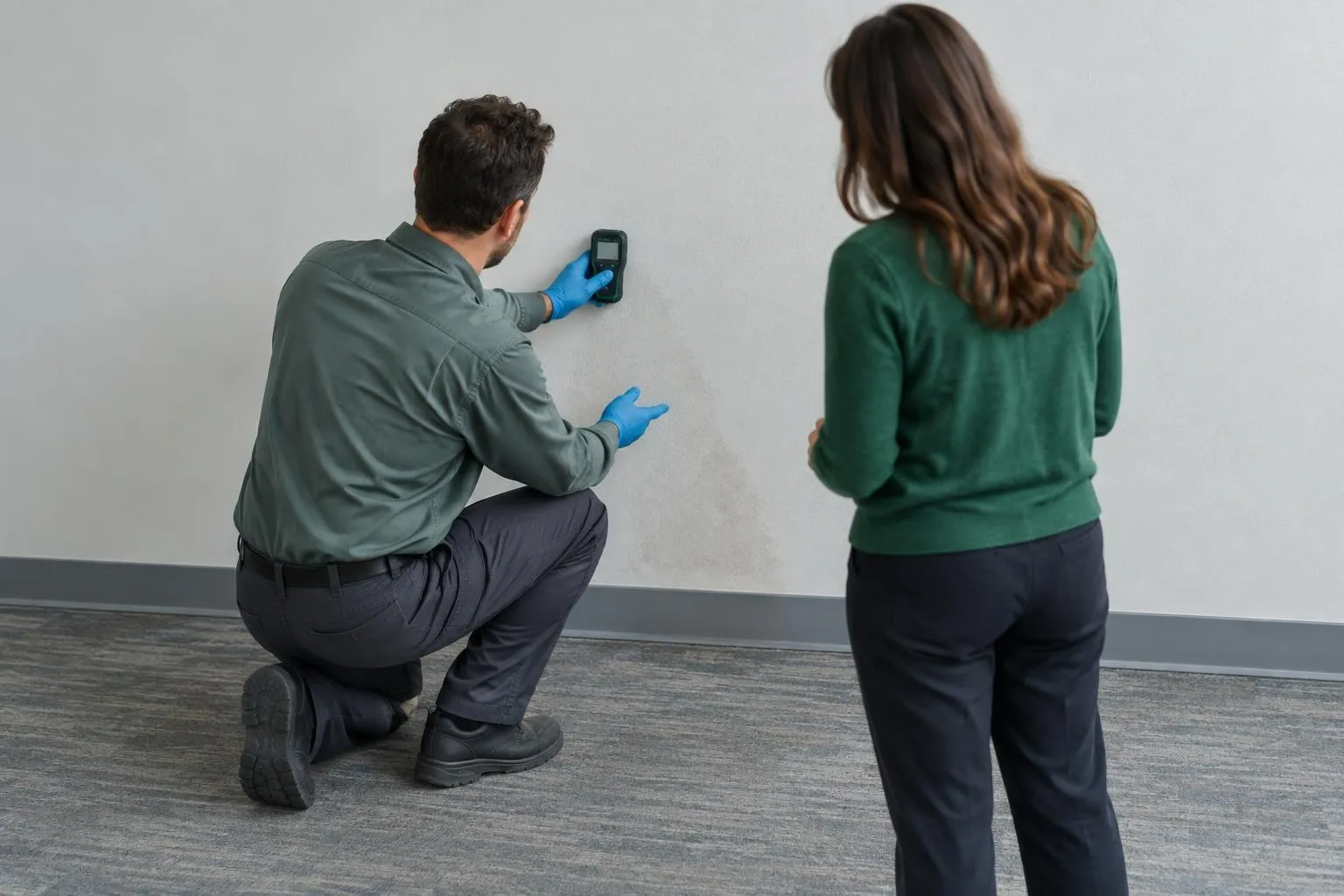
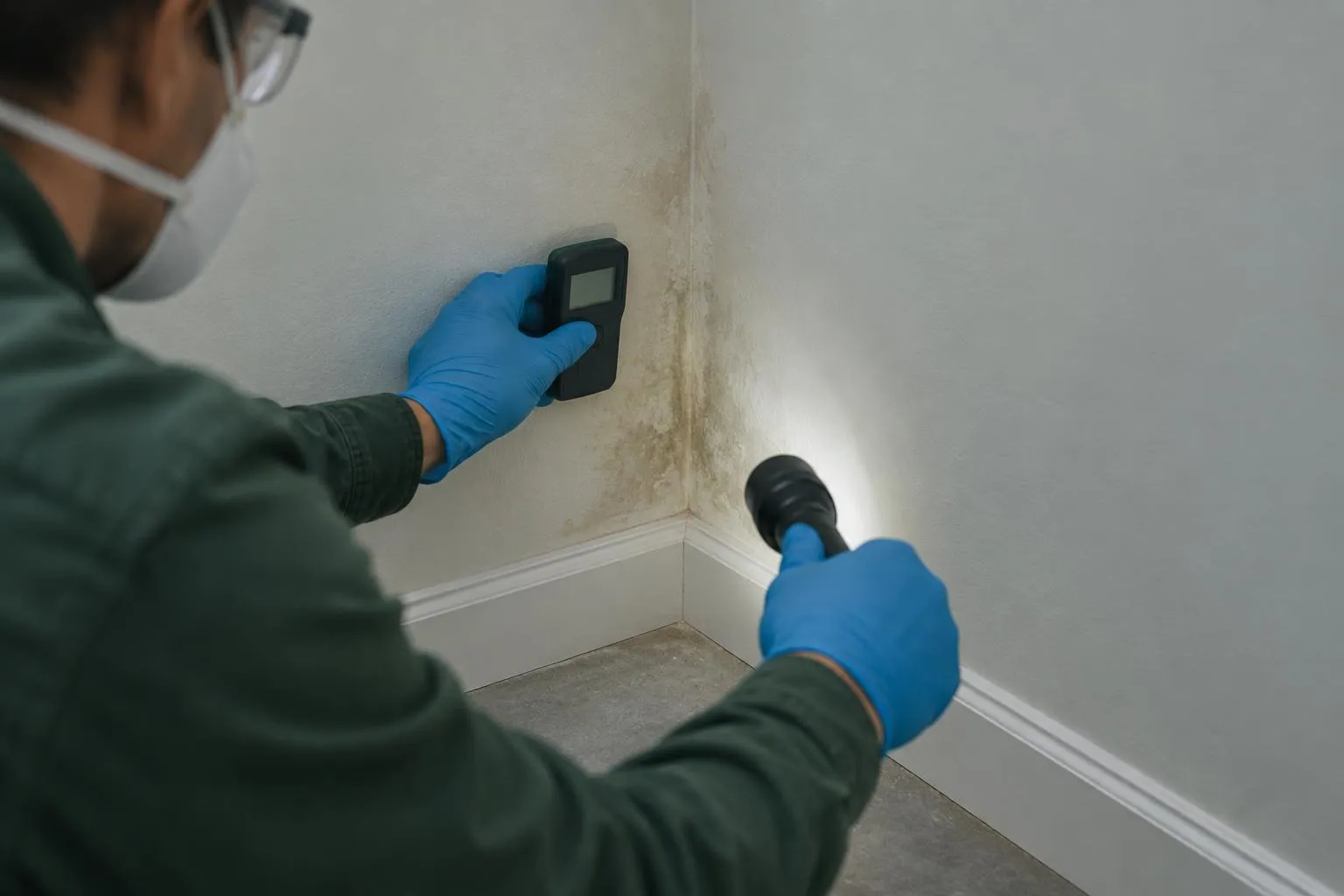
What it looks like: An inspector arrives, takes air samples, and leaves—no moisture meter, no wall cavity checks, no discussion of water sources or humidity.
Why it matters: Mold is a symptom of a moisture problem. You can’t fix mold without fixing the moisture source. An inspector who skips moisture diagnosis is missing the root cause, which means remediation will fail and mold will return.
Best practice: visual inspection + moisture mapping comes before any sampling. A moisture meter is non-negotiable equipment.
Reality Check:If they’re not looking for water, they’re not actually solving the problem.
How to avoid it: Ask: “What moisture detection tools will you use?” The answer should include moisture meters, infrared thermal imaging, or both. If they look confused, they’re not qualified.
Red Flag #6: Scare Tactics and “Toxic Black Mold” Language
What it looks like: Emphasis on scary species names, health horror stories, or urgent language designed to rush you into a decision.
Why it matters: While some molds are more allergenic than others, the term “toxic black mold” is marketing speak, not science. It’s designed to frighten you into paying for expensive remediation immediately. Real professionals use precise species identification and discuss actual health risks based on occupant sensitivity—not blanket panic.
How to avoid it: Watch for urgent language like “This is dangerous, you need to act today” or exclusive focus on scary species. Ask: “What health risks does this species actually pose in this building?” If they can’t give a nuanced answer, they’re selling fear.
Red Flag #7: No Outdoor Control Sample or Context
What it looks like: Lab results show “elevated mold spore counts” without any comparison to outdoor levels or building history.
Why it matters: Mold spores exist everywhere—indoors and outdoors. An elevated indoor count only matters if it’s significantly higher than the outdoor baseline. Without an outdoor control sample, those numbers are just noise.
This is where misread results live. An inspector (or lab) can make normal indoor levels sound alarming if they strip away context.
How to avoid it: Before you sign off on any report, ask: “What was the outdoor control sample? How does my indoor count compare?” If there’s no outdoor sample, the report is incomplete and unreliable.
Practical Bottom Line
Hiring the right mold inspector is about eliminating conflicts of interest and demanding rigor. Here’s your action plan:
- Call 3-5 local inspectors. Ask the vetting questions above—credentials, E&O, moisture tools, outdoor control samples, remediation services.
- Check BBB ratings. Look for A+ with zero complaints.
- Get referrals. Ask for 3+ recent client references and actually call them.
- Watch for red flags in the conversation itself. If they’re pushy, vague, or quick to recommend expensive work, that’s a signal.
- Get everything in writing. Scope of work, sampling protocol, timeline, and fees upfront.
You’re the hero here—you’re paying for professional judgment you can trust. Don’t settle for shortcuts or conflicts of interest.
For a deeper dive into what a qualified mold inspector actually does, check out the Complete Guide to Mold Inspectors. And if you’re already in remediation territory, understand the red flags in remediation companies too—because a bad inspector often leads to a bad remediation contractor.
Done reading? Get quotes from mold inspectors near you.
Takes about a minute. Free, no obligation; providers reply to you directly.
Popular cities:
Nick built this directory to help homeowners find credentialed mold inspectors without wading through contractors who mostly want to sell remediation — a conflict of interest he ran into when trying to assess his own home after a plumbing leak.