Get free quotes from mold inspection near you
Takes about a minute. Free, no obligation; providers reply to you directly.
I stood in a client’s living room while a mold inspector from across the country quoted me $1,200 over the phone. Same inspection, same house size, same suspected black mold. A week later, I got a second opinion from a local guy: $450. Same credentials. Same process. Same result—but a $750 difference.
That’s when I realized: mold inspection pricing isn’t broken, it’s regional. And if you don’t know where you stand, you’re leaving money on the table or hiring someone who’s cutting corners to hit a lower price.
The Short Version:A standard mold inspection (visual + 2 samples) runs $300–$700 nationally, but your actual cost depends on where you live, your home’s size, and whether you need testing for toxigenic species like black mold. Getting 2–3 quotes from local certified inspectors is non-negotiable.
Key Takeaways
- National average hovers around $670, but ranges wildly from $150 (visual-only) to $2,999+ (comprehensive with thermal imaging on large properties)
- Your zip code matters more than you think—NYC inspections run $500–$1,200+, while Atlanta averages $300–$500
- Home size is the biggest cost driver after location—expect $300–$400 for homes under 4,000 sq ft, $700–$1,000+ for larger properties
- Black mold testing adds $200–$300 to baseline costs in markets like Houston
Why Mold Inspector Costs Vary So Much Between States
The $750 difference I mentioned above? That’s not anomalous. It’s the norm.
Here’s what most people miss: mold inspection pricing isn’t regulated nationally. There’s no federal price floor. Instead, costs track closely with regional labor costs, market competition, property complexity, and—critically—how much moisture and mold your state actually deals with.
High-demand states with humidity issues (New Jersey, New York, Kansas) see elevated pricing because inspectors are busier, credentials are more stringently required, and mold prevalence justifies premium expertise. Low-demand, drier states see lower baseline costs because there’s less urgency and more price competition.
Add in cost of living, and you get the real story: A certified mold inspector in San Jose isn’t just charging more because they’re greedy. They’re charging more because rent, licensing, equipment, and lab partnerships cost more.
Regional Pricing Breakdown: Where You’ll Pay More (And Less)
| Market | Visual Only | Standard (Visual + 2 Samples) | Comprehensive (5+ Samples, Thermal Imaging) | Black Mold Add-On |
|---|---|---|---|---|
| New York City | $500–$800 | $700–$1,200+ | $1,200–$2,000+ | Included in premium tiers |
| Los Angeles | $400–$600 | $600–$1,000 | $1,000–$1,500+ | ~$150–$250 |
| San Jose | $450–$700 | $700–$1,100+ | $1,100–$1,800+ | ~$150–$250 |
| Seattle | $375–$600 | $600–$950+ | $950–$1,500+ | ~$150–$200 |
| Atlanta | $300–$400 | $400–$600 | $600–$900+ | ~$150–$200 |
| Houston | $250–$350 | $400–$700 | $700–$1,000+ | $200–$300 |
| Tampa / Orlando | $300–$450 | $450–$750 | $750–$1,000+ | ~$150–$200 |
| National Average | $150–$300 | $300–$700 | $700–$1,500+ | $200–$300 |
What the data shows: You’re paying 2–3x more in coastal metros than you would in secondary markets for the same scope of work.
The Real Drivers Behind Regional Cost Differences
1. Labor Costs (The Biggest Factor)
A certified mold inspector in San Jose spends 45% more on rent than someone in Atlanta. That overhead gets passed down. San Jose inspections average $400–$1,100+ because inspectors’ operating costs are brutal. Atlanta? $300–$500+ for the same work.
2. Mold Prevalence and Seasonal Demand
States with high humidity (New York, New Jersey) see year-round demand spikes. Busy inspectors don’t discount—they optimize for efficiency and premium work. Drier states have seasonal dead zones, which means inspectors compete harder on price.
3. Regulatory Complexity
Some states require hazmat certifications for black mold assessment. Others don’t. New York and California have stricter air-quality reporting standards, which means more documentation, more time, more cost.
4. Property Size and Complexity
Larger homes aren’t just proportionally more expensive—they’re exponentially more expensive. A 3,000 sq ft home in Atlanta might run $400. A 6,000 sq ft home in the same city? $700–$1,000+. Thermal imaging, multiple sampling zones, and crawl-space access eat time.
5. Lab Testing Fees
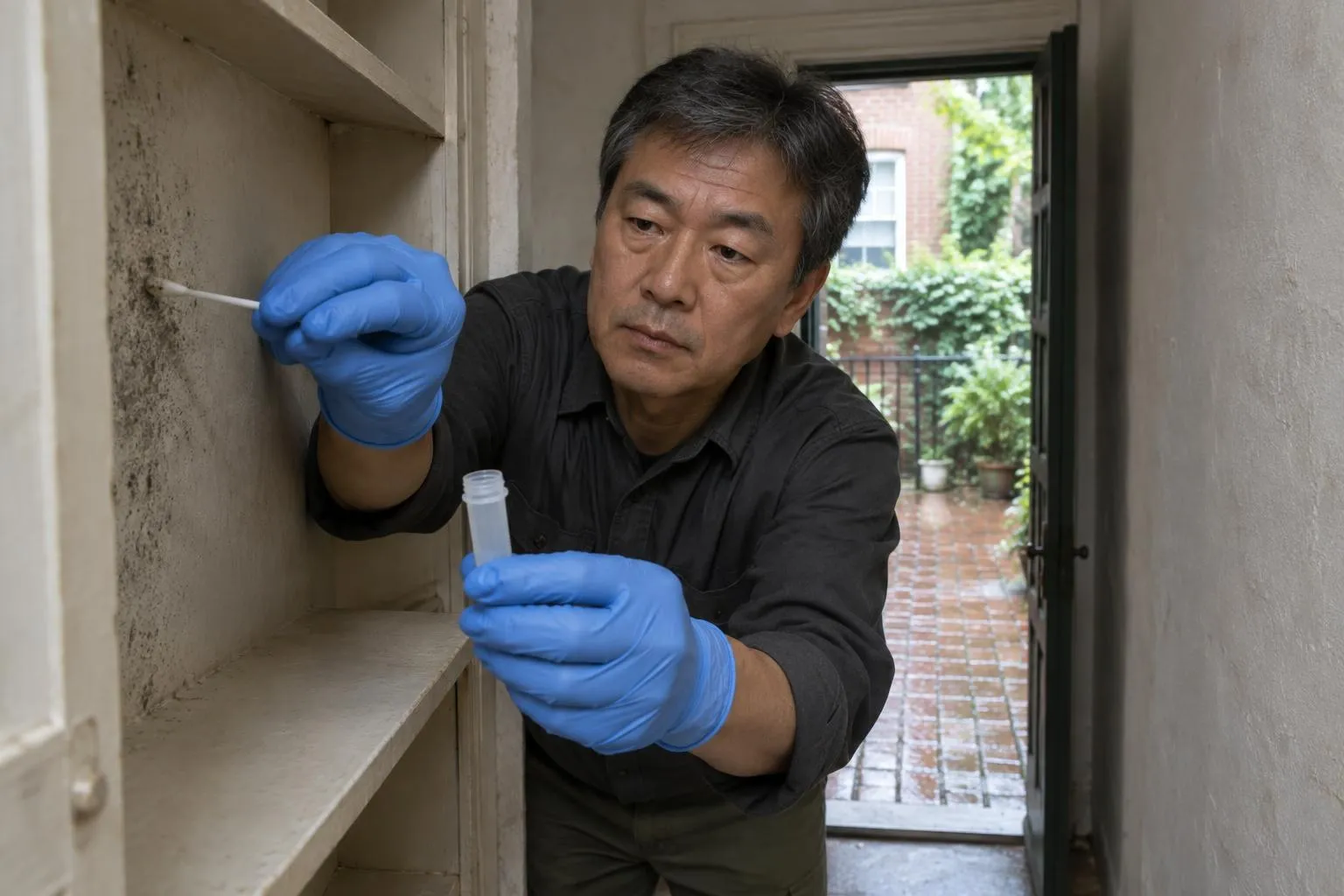
Standard mold samples run $50–$350 per sample. Black mold or toxigenic species testing adds $200–$300. In Houston, homeowners routinely pay $200–$300 extra to confirm black mold specifically, pushing total costs from $600 baseline to $800–$1,000+.
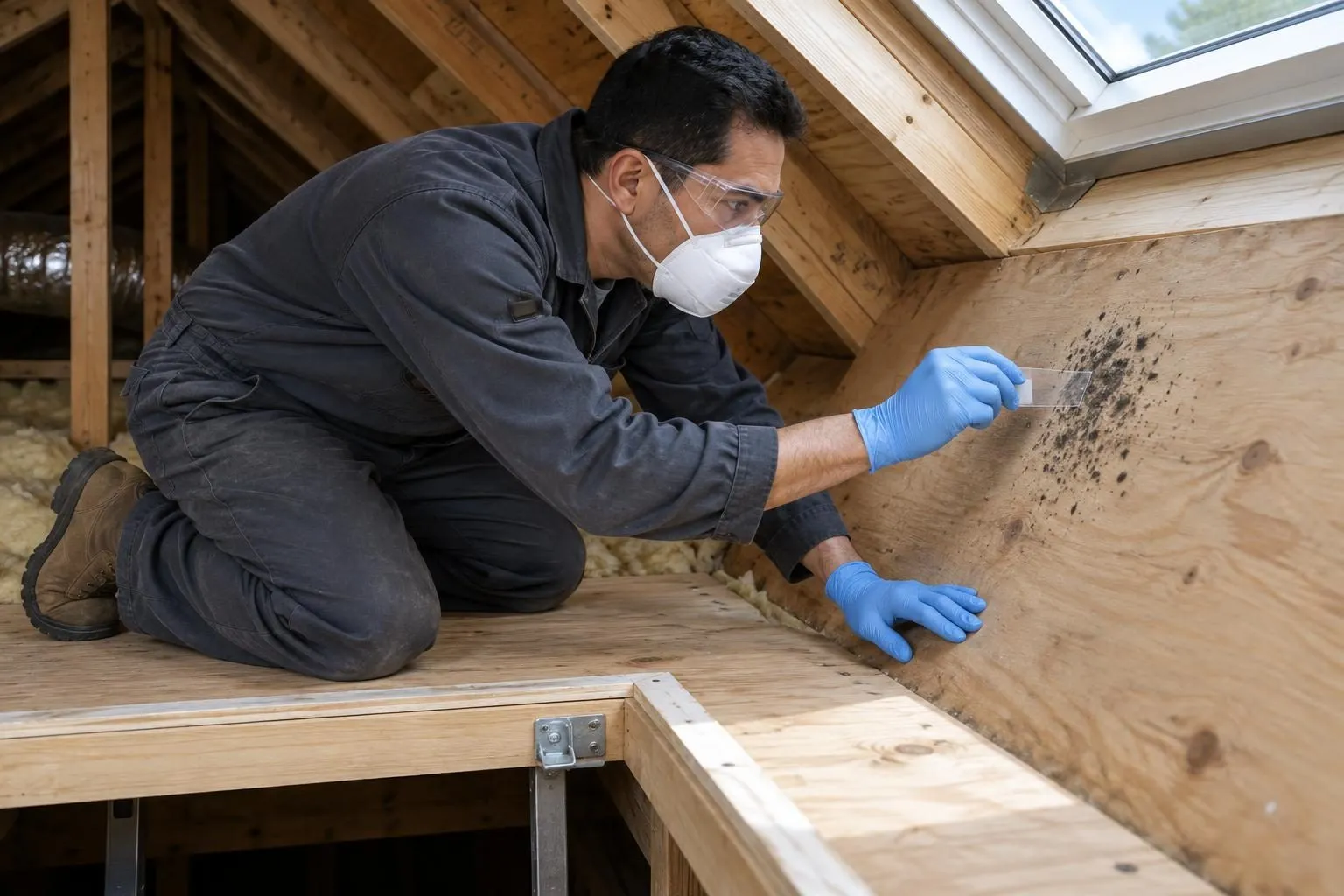
Reality Check:The cheapest quote isn’t always the worst deal, but it’s a red flag if it’s dramatically lower than regional averages. Visual-only inspections for $149 might miss hidden moisture problems that require thermal imaging ($700+). You’re not paying for paranoia—you’re paying for tools that actually find things.
What Inflates Costs in Your Specific Situation
Beyond geography, three factors will push your bill up:
Home size. Homes under 4,000 sq ft: $300–$400. Over 4,000 sq ft: $700–$1,000+. Non-linear scaling is real.
Black mold suspicion. If you suspect Stachybotrys (true black mold) rather than generic mold, labs charge $50–$350 per sample plus specialized analysis. Houston inspectors quote $600–$800+ for black mold vs. $450–$550 for common species.
Access challenges. Crawl spaces, attics, and tight crawls require more time. Comprehensive inspections with thermal imaging (needed for wall cavities and hidden moisture) jump to $700–$1,500+.
How to Find Real Value Without Getting Fleeced
Pro Tip:If you’re in a high-cost market (NYC, LA, San Jose), consider hiring a local visual inspector first ($300–$500) to identify suspicious zones. Only run full lab testing on those areas. Many inspectors won’t advertise this tiered approach, but most will negotiate. You can cut costs 30–40% by targeting your sampling instead of blanket-testing everything.
The other move: Check off-season timing. Demand spikes post-flood, post-heavy rain, and during humid summer months. Schedule inspections in late fall or winter, and you’ll get better rates and faster turnaround.
Get 2–3 quotes. Not to play inspectors against each other, but to understand what’s actually included in each price. One quote at $500 might be visual-only. Another at $600 might include 3 samples and a written report. That $100 difference represents serious value.
Practical Bottom Line
If you’re in a major metro (NYC, LA, San Jose): Budget $700–$1,200 for a standard inspection. Get a quote, ask what’s included, and ask if they’ll negotiate on scope. Don’t cheap out—your inspector’s credentials matter more than their price.
If you’re in a secondary market (Atlanta, Houston, Orlando): You’ve got pricing power. Get 2–3 local quotes. Standard inspections should run $400–$700. If someone’s quoting $1,000+, they’re padding.
If you suspect black mold: Budget an extra $200–$300 for specialized lab work. This isn’t optional—misidentifying species can lead to under-remediation and persistent indoor air quality problems.
Next step: Call 2–3 certified inspectors in your area (look for ACAC CMC or state hazmat certifications). Ask for references and a scope-of-work breakdown. Get it in writing. Then decide whether you need the comprehensive package or can start with visual assessment plus targeted sampling.
For more on what inspectors actually do—and what questions to ask—check out our complete guide to mold inspectors. You’ll also find city-specific guidance for major markets like New York, Los Angeles, and Houston.
The goal isn’t to find the cheapest inspector. It’s to find the one who’s transparent about what you’re paying for and why. That’s worth the extra phone call.
Done reading? Get quotes from mold inspectors near you.
Takes about a minute. Free, no obligation; providers reply to you directly.
Popular cities:
Nick built this directory to help homeowners find credentialed mold inspectors without wading through contractors who mostly want to sell remediation — a conflict of interest he ran into when trying to assess his own home after a plumbing leak.