

Office location not published
Service area: “Aggie Inspector Group | Mold Inspections in Houston, TX”
Published service area ↗Compare curated mold inspectors, check certifications, read reviews, and request quotes — all in one place.
Map shows providers with a known office location. All providers are listed below.
No providers match this filter.
Providers with an office in the Houston area, matched by the ZIP code of their published address.
Based outside the Houston area, with Houston named in the service area on their own website.
Office location not published
Service area: “Aggie Inspector Group | Mold Inspections in Houston, TX”
Published service area ↗Office location not published
Service area: “we strive to provide quality service to residential and commercial properties in Houston, TX.”
Published service area ↗Also in Texas: Killeen / Temple / Ft Hood area (1), Texoma area (1), Tyler / East TX area (1)
Need help choosing? Get matched with top providers in seconds.
0 providers selected
Are you a mold inspector in Houston? Already listed here: Aggie Inspector Group, Building Air Quality, Inc., Certified Mold Testing & Consulting and 11 more.
List your businessView curated providers, check certifications, and read real client reviews.
Select up to 5 providers and send your project details. Free, no obligation.
Compare quotes, check availability, and book directly with the provider.
Hiring a mold inspector in Houston is like hiring a plumber — everyone claims to know what they’re doing, half of them cut corners, and you won’t know the difference until the bill arrives or the problem gets worse. The Houston market is flooded with inspectors ranging from genuinely credentialed professionals to handy guys with a moisture meter and a website. This directory cuts through that noise and connects you with qualified inspectors who actually know what they’re looking for — and can back it up with proper certifications and third-party lab protocols.
Look for specific credentials. A credentialed inspector holds at least one of these: CMI (Certified Mold Inspector), ACAC CMC or CMRS (Council-certified), or IAC2 Certified Indoor Air Quality Inspector. Don’t accept “licensed” or “bonded” alone — Texas doesn’t license mold inspectors, so anyone can claim the title. Credentials mean the inspector has passed rigorous exams and maintains continuing education. Ask for proof before booking.
Verify they use third-party lab analysis. A legit inspection includes visual assessment, moisture mapping, and air or surface samples sent to an independent lab (not their own lab or a referral partner they profit from). If an inspector tells you they can diagnose mold species by eye alone, they’re either overconfident or setting you up for an unnecessary remediation contract.
Ask about the full report scope. The best inspections identify what species of mold is present, where it’s located, how extensive it is, and what caused it (moisture source). A one-page report with a photo and a remediation quote is not a real inspection — it’s a sales pitch. You want a detailed technical report with actionable next steps.
Check the turnaround. Most inspections take 2–5 business days to complete (including lab work). Anything faster is suspicious; anything slower without explanation is poor service. Houston’s humidity means mold growth conditions are year-round, but there’s no emergency so urgent that cutting corners makes sense.
Pro Tip: During humid Houston summers, schedule inspections on weekday mornings when moisture levels are typically lowest. It gives the inspector cleaner conditions and you a more conservative assessment — which is what you actually want.
A standard Houston mold inspection runs $200–800 depending on property size, number of areas tested, and lab fees. A small condo might be $250–350; a 3,000+ sq ft home with multiple moisture concerns could hit $600–800. The process takes about 2–3 hours on-site, then 3–7 business days for lab results. You’ll receive a written report with photos, lab findings, moisture mapping data, and remediation recommendations — not a verbal summary or a contractor’s estimate.
Reality Check: If someone quotes you $100 for an inspection, they’re either loss-leading you toward a $5,000 remediation contract, or they’re not actually doing an inspection. Cheap inspections attract cheap inspectors. You’re paying for credentials, equipment, lab work, and honest analysis — not guesswork.
Houston’s subtropical climate — high humidity, frequent heavy rains, and occasional flooding — makes mold inspection particularly relevant. The city’s older housing stock and active home-buying market mean inspections are routine before closing, and water intrusion claims (from roof damage, plumbing failures, and flooding) drive urgent requests. Choose an inspector who understands Houston’s specific moisture patterns and isn’t just following a national template.
Use this directory to find inspectors vetted for credentials and local experience. Call at least two, ask the questions above, and book the one who answers thoroughly — not the one who picks up fastest.
Mold Inspector services in Houston typically run $200-800 per inspection, depending on scope, complexity, and turnaround requirements. Expedited work and specialized equipment add cost.
Look for CMI — it's the credential that separates qualified mold inspectors from the rest. Also verify insurance, check reviews, and confirm they can handle your project's specific requirements.
There are currently 14 mold inspectors listed in Houston, TX on MoldRegistry.
Sponsored providers pay for more prominent placement on pages where they already qualify to appear. Payment does not change a provider's location, credentials or reviews, and it is not an endorsement. All providers on MoldRegistry — sponsored or not — are real businesses.

Find the right mold inspector in Houston before hidden mold becomes a $18k problem. See which 42+ licensed inspectors actually use thermal imaging.
Find certified, independent mold inspectors: what to expect, how much to pay ($300–$700), and red flags to avoid before hiring.
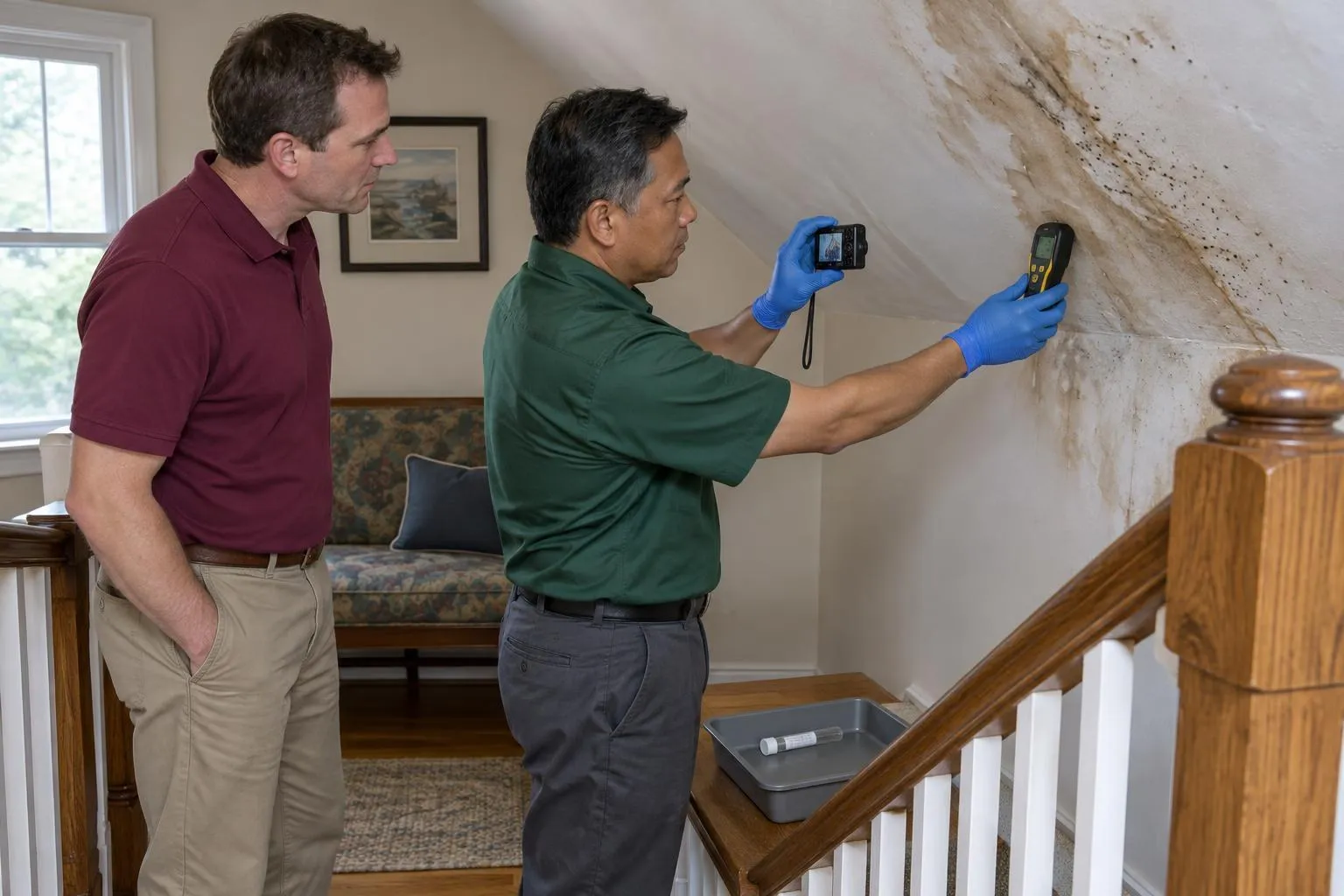
Your mold inspector's report needs visual proof, moisture readings, and lab results—here's exactly what to demand on a quality checklist.
Looking for more? Browse our full resource library or find mold inspectors in other cities.