Get free quotes from mold inspection near you
Takes about a minute. Free, no obligation; providers reply to you directly.
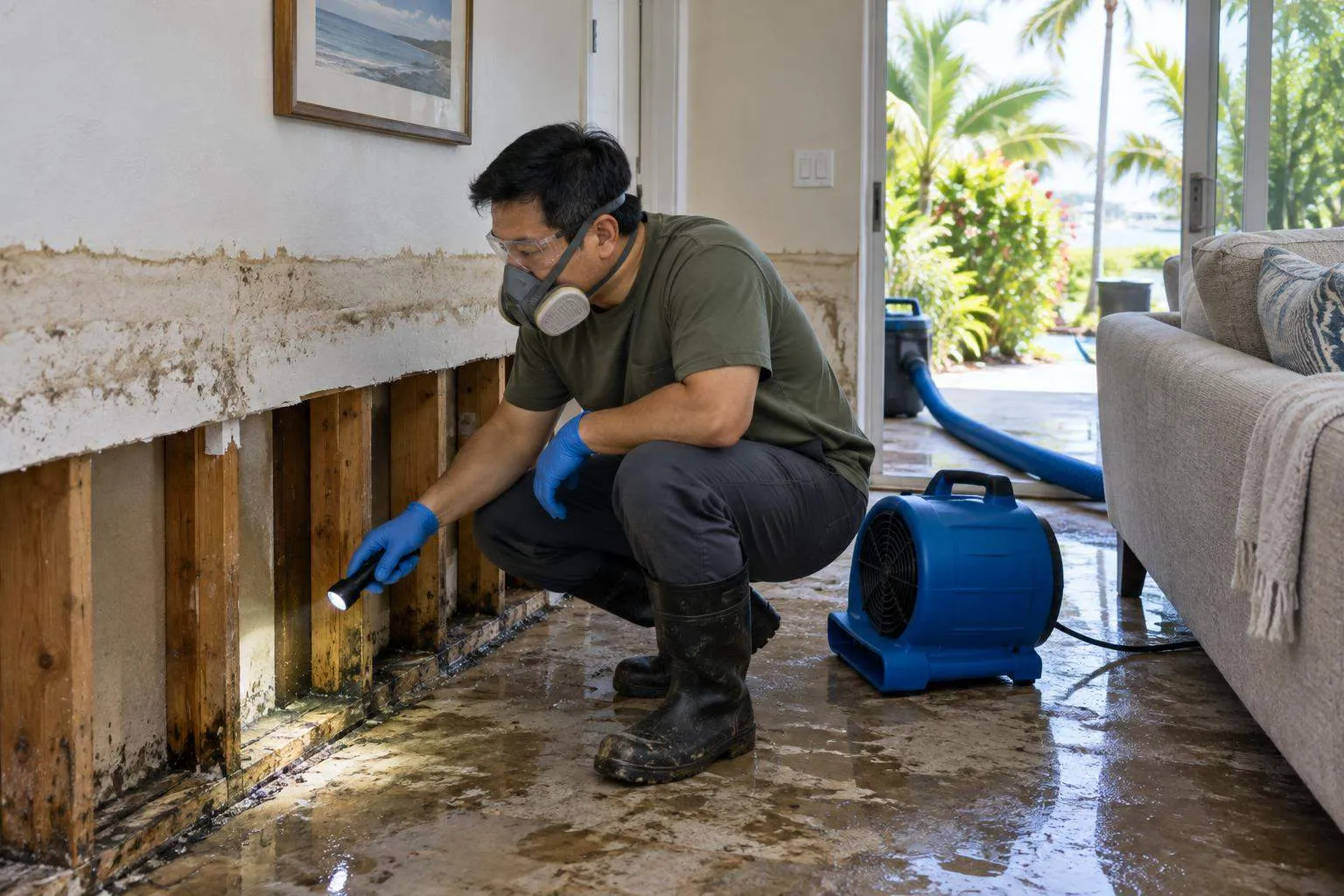
Your street flooded two days ago. The water is out of the living room, the borrowed pump is still running, and there’s a faint musty smell coming off the baseboards. You’re wondering whether to call a mold inspector right now.
Probably not yet. Mold can start growing on wet materials within 24 to 48 hours, according to RestoreAdvisor and several other sources. That clock is the whole story of the first two days.
The Short Version: In the first 48 hours, make the building safe, document everything, get the water out, and start drying. Mold testing comes after that. An inspection is worth paying for once standing water is gone and drying is underway, especially if you see staining or smell mustiness, or if an insurer or buyer needs a written record.
Key Takeaways
- Dry first, test second. Testing a wet house mostly tells you the house is wet.
- Document before you clean. Photos, video, and receipts are what an insurance claim runs on.
- Budget $150-$400 for a visual-only inspection and $300-$700 for one with sampling, for a typical single-family home.
- Expect scams after a storm. Pressure to sign the same day is the tell.
The first 48 hours, in order
1. Confirm the building is safe. Check for structural damage, gas leaks, and electrical hazards. Follow official re-entry guidance before you go in. Shut off the water source if there is one, and cut power only if you can do it safely.
2. Document before you touch anything. Take wide photos of every room. Take close-ups of water lines, warped flooring, peeling paint, and any visible growth. Record a room-by-room video walkthrough. Keep a dated inventory of damaged contents, with brand, model, and serial numbers where you have them. Save every receipt for pumps, dehumidifiers, fans, tarps, trash haul-off, and temporary lodging.
3. Remove standing water and start mechanical drying right away. Pull out saturated porous materials that won’t dry in time.
4. Keep humidity down. Indoor humidity above 50% promotes mold growth. A humidistat or moisture meter will tell you where you stand.
Reality Check: Photos taken after cleanup show an adjuster a clean room. Photos taken before cleanup show the loss. Do things in that order.
When an inspection is actually worth it
Here’s what most people miss: an inspection is a scoping tool, not an emergency response. It earns its fee in a few situations.
- Visible staining or a musty odor after the structure has been drying for a few days.
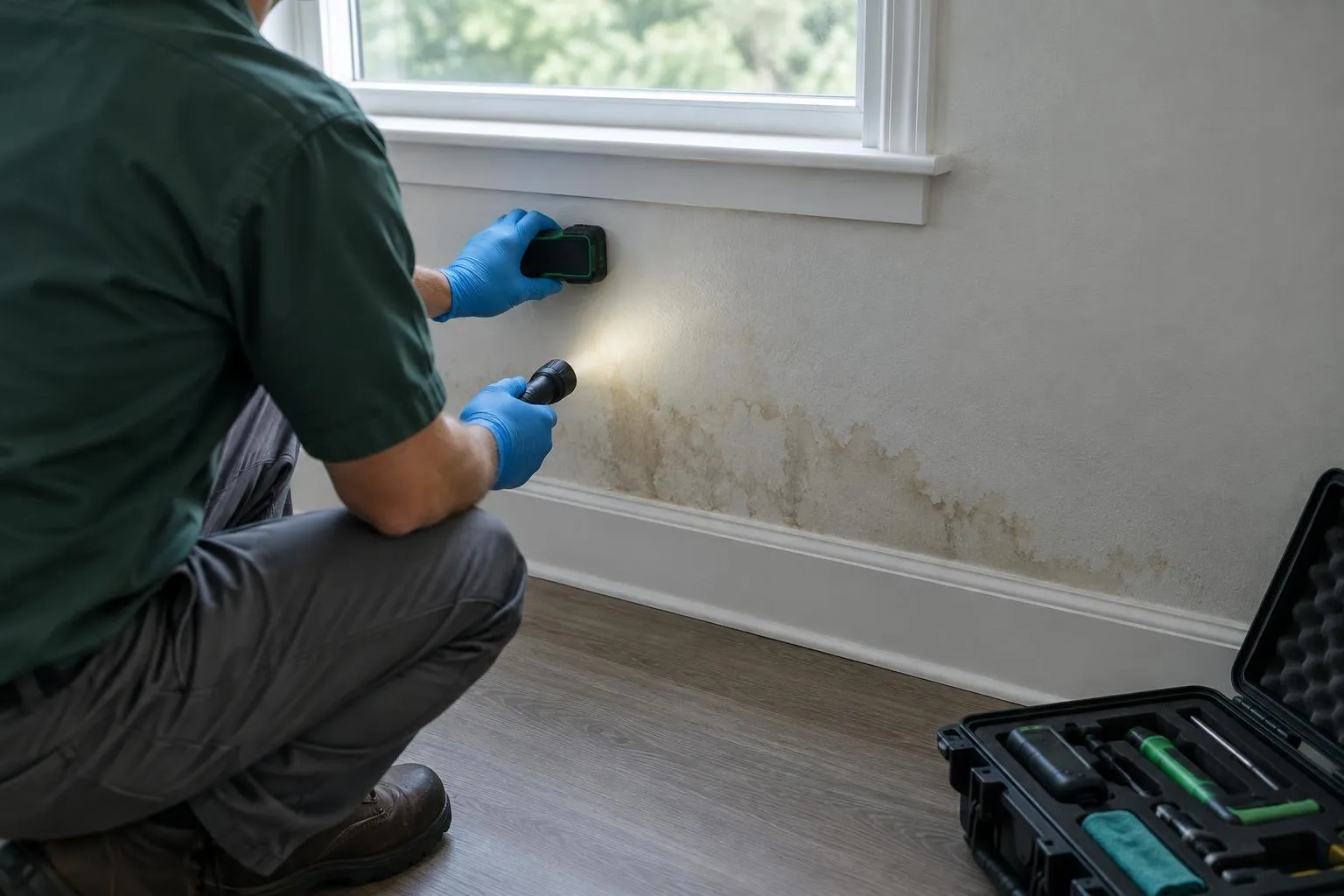
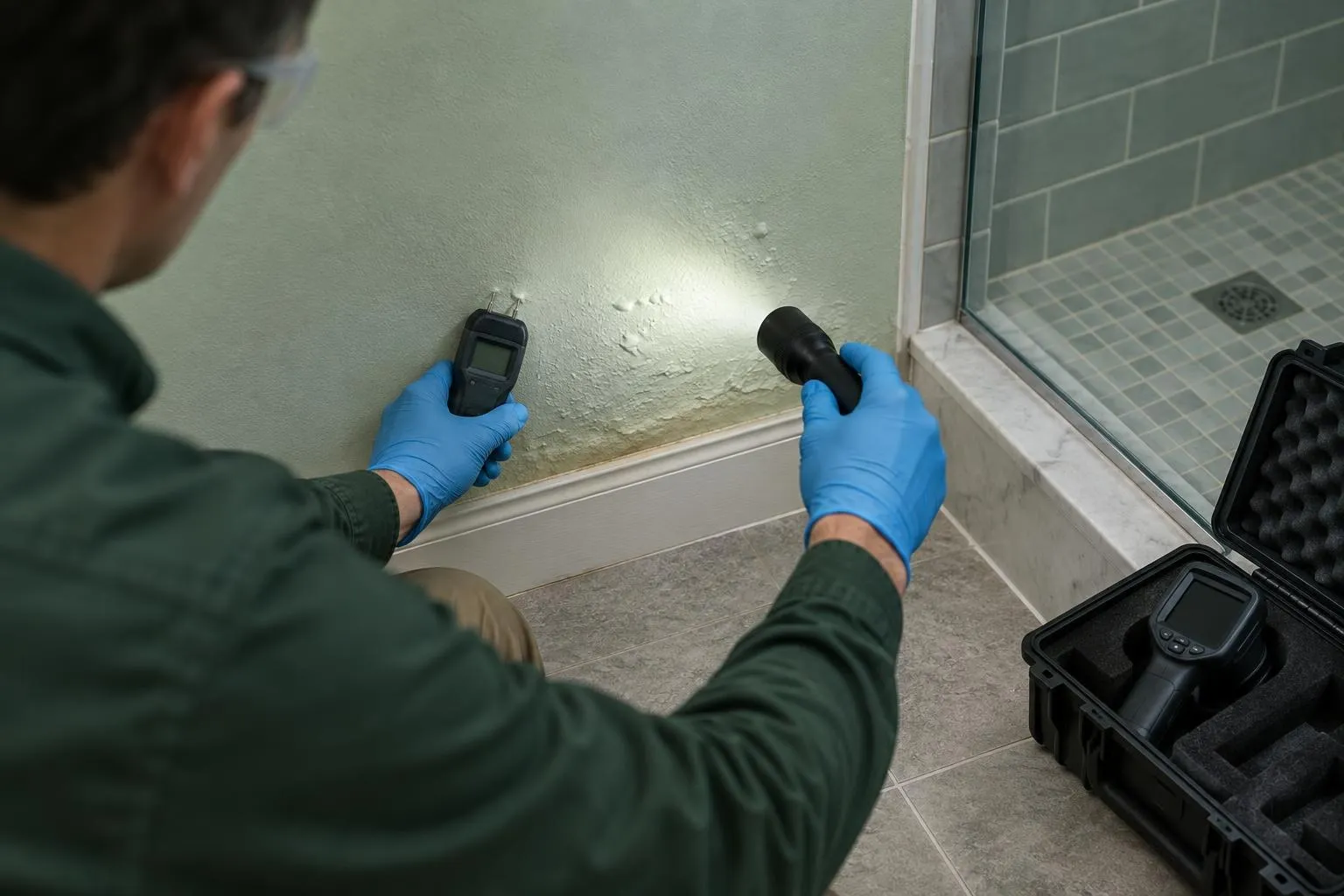
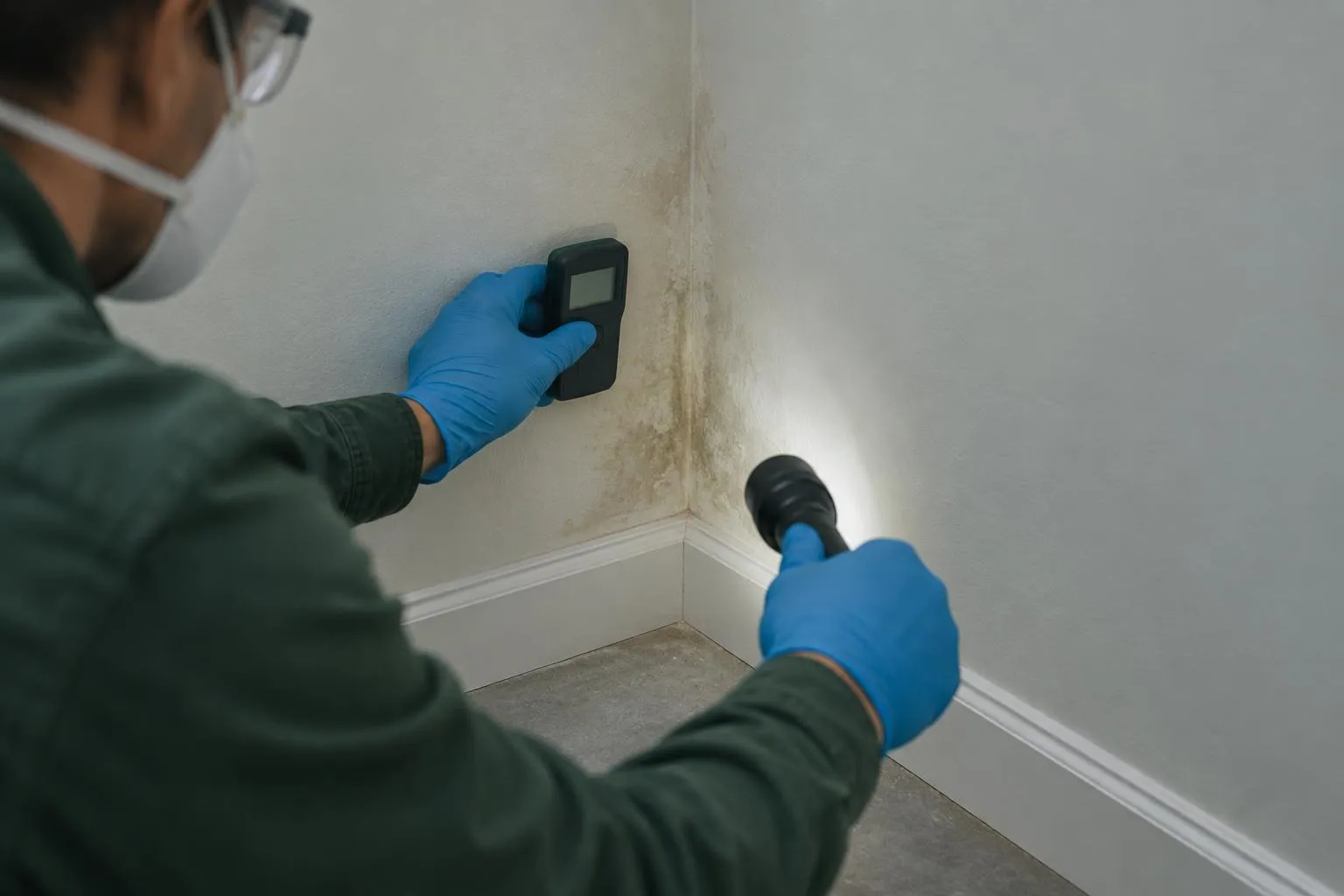
- Hidden moisture you can’t see, such as wall cavities, under flooring, or HVAC runs. A credentialed inspector uses calibrated moisture meters and, when needed, thermal imaging to map it.
- A claim or a sale where you need a written report that separates visible damage, hidden moisture, and confirmed mold.
- Post-remediation verification, to confirm the work actually worked. Background research puts clearance testing at roughly $300-$500.
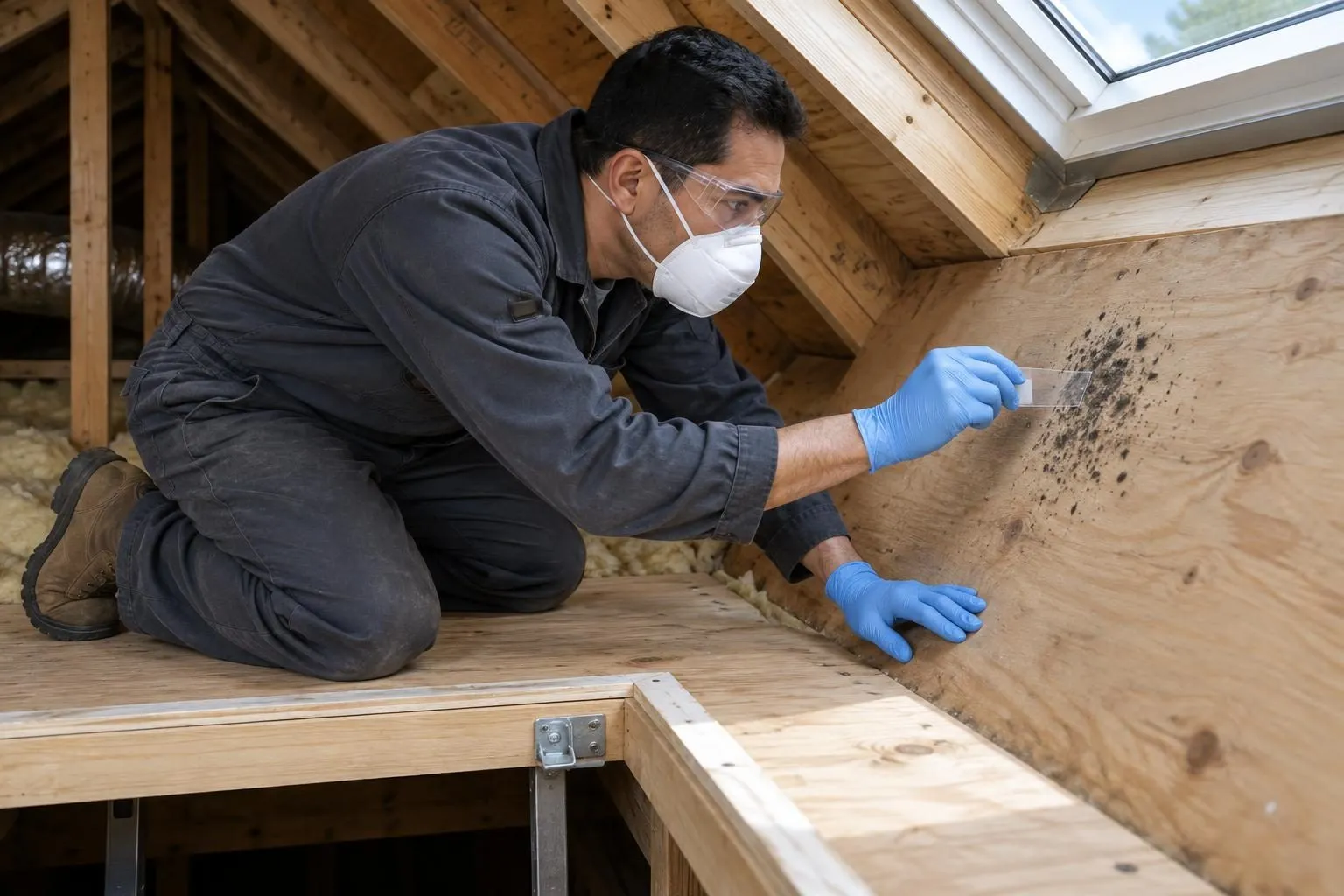
Sampling still has a role after a flood, when it targets a specific question. Be wary of anyone who treats a single swab or air test as a pass/fail verdict. For how the report itself should read, see How to Review a Mold Inspector’s Work.
What it costs
| Service | Typical price (2026) |
|---|---|
| Visual-only inspection | $150-$400 |
| Standard inspection with sampling | $300-$700 |
| Full inspection plus lab testing | $400-$800 |
| Larger or complex homes (crawlspaces, multiple HVAC zones) | $1,000-$2,000 |
| Air sample add-on | $75-$150 per sample |
| ERMI dust test (separate line item) | $250-$400 |
These are national ranges, so your market may differ. Prices from the providers themselves land in the same neighborhood. One lists a $300 inspection with two air samples. Another charges $50 for each extra sample. Our full breakdown is in How Much Does a Mold Inspector Cost?
Pro Tip: Ask for the per-sample price before the visit. After a flood, one house can need more samples than a standard package includes.
Where demand spikes, and what that means for you
The heaviest post-flood demand falls on the Gulf Coast, the Atlantic coastal states, and low-lying flood-prone areas. Hot, humid climates are the worst case, because slow drying turns into mold quickly. Colder regions get a second peak after winter storms and spring thaw, from burst pipes, ice dams, and basement flooding.
I’ll be honest: the research I pulled doesn’t show a calendar deadline or filing date that drives inspection demand. The 24-48 hour drying window does.
Regional resources exist, and one example is a post-flood mold checklist written for St. Louis. For local inspectors, see our pages for St. Louis, Charlotte, and Fresno.
Post-storm scams and how to avoid them
Nobody tells you this: the week after a storm is when the pitch gets loudest. Watch for these.
- No written report, or a report with no stated scope.
- A guaranteed pass/fail from one swab or one air test.
- Hard upselling right after the storm. The same company that finds mold shouldn’t be the one quoting the remediation, if you can avoid it.
- No explanation of the sampling method or its limits.
A real inspector gives you a written scope up front. They use calibrated meters and send samples to an accredited lab with chain of custody. They will also tell you what problem the inspection can and can’t solve.
Look for named credentials such as CMI or ACAC CMC. Our red flags list and 15 questions to ask cover the rest. Independence matters too, and Mold Inspector vs. Mold Testing Service explains why.
By the Numbers
From MoldRegistry directory data (more at /industry-statistics/):
- 598 verified providers listed across 47 states
- Most providers: Florida (62), California (57), Texas (55)
- Credentials shown: Mold Assessor Certified (49 providers, 8%), IAQ Specialist (21, 4%), Thermography Certified (17, 3%)
- Average years in business, where published: 24.7
The Practical Bottom Line
- Hours 0-6: safety check, shut off water, photos and video.
- Hours 6-48: pump out standing water, remove saturated materials, run fans and dehumidifiers, and keep every receipt.
- Day 3 onward: if you see staining, smell mustiness, or need documentation, hire an independent credentialed inspector. Get the scope, sample pricing, and lab in writing first.
- After remediation: pay for verification testing.
New to the process? Start with the Complete Guide to Mold Inspectors, then read What to Expect When You Hire a Mold Inspector.
Done reading? Get quotes from mold inspectors near you.
Takes about a minute. Free, no obligation; providers reply to you directly.
Popular cities:
Nick built this directory to help homeowners find credentialed mold inspectors without wading through contractors who mostly want to sell remediation — a conflict of interest he ran into when trying to assess his own home after a plumbing leak.