

Mold Inspectors in Seattle, WA
Compare curated mold inspectors, check certifications, read reviews, and request quotes — all in one place.
Map shows providers with a known office location. All providers are listed below.
No providers match this filter.
Providers with an office in the Seattle-Tacoma area, matched by the ZIP code of their published address.
Also in Washington: Spokane / Coeur D'Alene area (3), Skagit / Island / SJI area (1)
Need help choosing? Get matched with top providers in seconds.
0 providers selected
Are you a mold inspector in Seattle? Already listed here: A-Tech Consulting, Advance Environmental, Inc., Boggs Inspection Services and 11 more.
List your businessHow MoldRegistry Works
Browse & Compare
View curated providers, check certifications, and read real client reviews.
Request Quotes
Select up to 5 providers and send your project details. Free, no obligation.
Book Your Mold Inspector
Compare quotes, check availability, and book directly with the provider.
Mold Inspectors in Seattle
Finding a qualified mold inspector in Seattle is harder than it should be—you’re either getting someone who learned the job last month, or you’re paying premium rates for credentials that don’t actually exist. The reality is that mold inspection sits in this weird middle ground where the barrier to entry is low (some “inspectors” have zero certifications), but the consequences of hiring the wrong person are high. You get a bad report, miss a real problem, or overpay for remediation you don’t need. This directory cuts through that noise by showing you who’s actually qualified, what to expect from the process, and how to spot the difference between a professional and someone just trying to bill hours.
How to Choose a Mold Inspector in Seattle
Look for specific credentials. The gold standard is CMI (Certified Mold Inspector) through ACAC or IAC2—it means they’ve passed a rigorous exam and follow a standardized protocol. If they also have ACAC CMC (microbial consultant) or CMRS (remediation supervisor), they understand the full remediation pipeline, not just the finding phase. Avoid anyone who won’t name their certifications upfront.
Verify they do moisture mapping and lab testing. A visual inspection alone is incomplete. The inspector should use moisture meters to find hidden water intrusion and collect air/surface samples sent to a third-party lab (not their own lab—that’s a conflict of interest). This is what separates a real inspection from an educated guess.
Ask about their experience with your specific issue. Water intrusion from a roof leak is different from a slow basement seep, which is different from occupant health concerns. Someone experienced with Seattle’s rainy climate and older home stock (common in neighborhoods like Ballard and Green Lake) will move faster and catch problems someone from Arizona might miss.
Check references for recent inspections. Ask the inspector to share contact info for two homeowners from the past year. Call them. Ask whether the report was clear, actionable, and accurate. Ask whether the remediation company followed the recommendations without pushing unnecessary work.
Reality Check: Pricing varies wildly ($200 for a small condo; $800+ for a multi-story home with basement). Get three quotes before committing. If someone’s charging $150 for a full inspection with sampling, they’re either new or cutting corners. If someone’s quoting $1,200 for a routine inspection, ask why.
Pro Tip: Request the inspection report in advance of your closing deadline (home purchase). A good inspector knows Seattle’s typical delays—lab results can take 5-7 business days—and will schedule accordingly.
What to Expect
A full mold inspection in Seattle typically takes 2-4 hours depending on the home’s size and your specific concerns. The inspector will visually assess all accessible areas (attic, crawl space, basement), use moisture mapping to detect hidden moisture in walls or under flooring, and collect air and surface samples sent to a third-party lab for species identification. You’ll get a detailed report within a week of lab results that identifies the species, extent, and likely cause—plus remediation recommendations. Cost ranges from $200-$800 depending on scope; add $50-$150 per lab sample if you want detailed microbial analysis.
Turnaround matters if you’re buying a home. Schedule the inspection early in your inspection period, not the day before closing. Some inspectors pad their calendars; find one who can move fast if a water intrusion or active growth requires same-week turnaround.
Local Market Overview
Seattle’s wet climate and aging housing stock (especially Capitol Hill, Wallingford, and Beacon Hill) mean moisture and mold are perennial issues. Washington State doesn’t license mold inspectors at the state level, so credentials are entirely on you to verify—this makes choosing a CMI-certified professional non-negotiable. Many inspectors also work across King County and Snohomish County; confirm they’re familiar with your specific neighborhood before booking.
Frequently Asked Questions
How much does a mold inspector cost in Seattle?
Mold Inspector services in Seattle typically run $200-800 per inspection, depending on scope, complexity, and turnaround requirements. Expedited work and specialized equipment add cost.
What should I look for in a mold inspector?
Look for CMI — it's the credential that separates qualified mold inspectors from the rest. Also verify insurance, check reviews, and confirm they can handle your project's specific requirements.
How many mold inspectors are in Seattle?
There are currently 14 mold inspectors listed in Seattle, WA on MoldRegistry.
What does "Sponsored" mean on a listing?
Sponsored providers pay for more prominent placement on pages where they already qualify to appear. Payment does not change a provider's location, credentials or reviews, and it is not an endorsement. All providers on MoldRegistry — sponsored or not — are real businesses.
Mold inspector Resources
The Complete Guide to Mold Inspectors
Find certified, independent mold inspectors: what to expect, how much to pay ($300–$700), and red flags to avoid before hiring.
How Much Does a Mold Inspector Cost? (2026 Pricing Guide)
mold inspector costs $300–$700 on average. See exactly what affects pricing, why quotes vary wildly, and how to avoid overpaying.
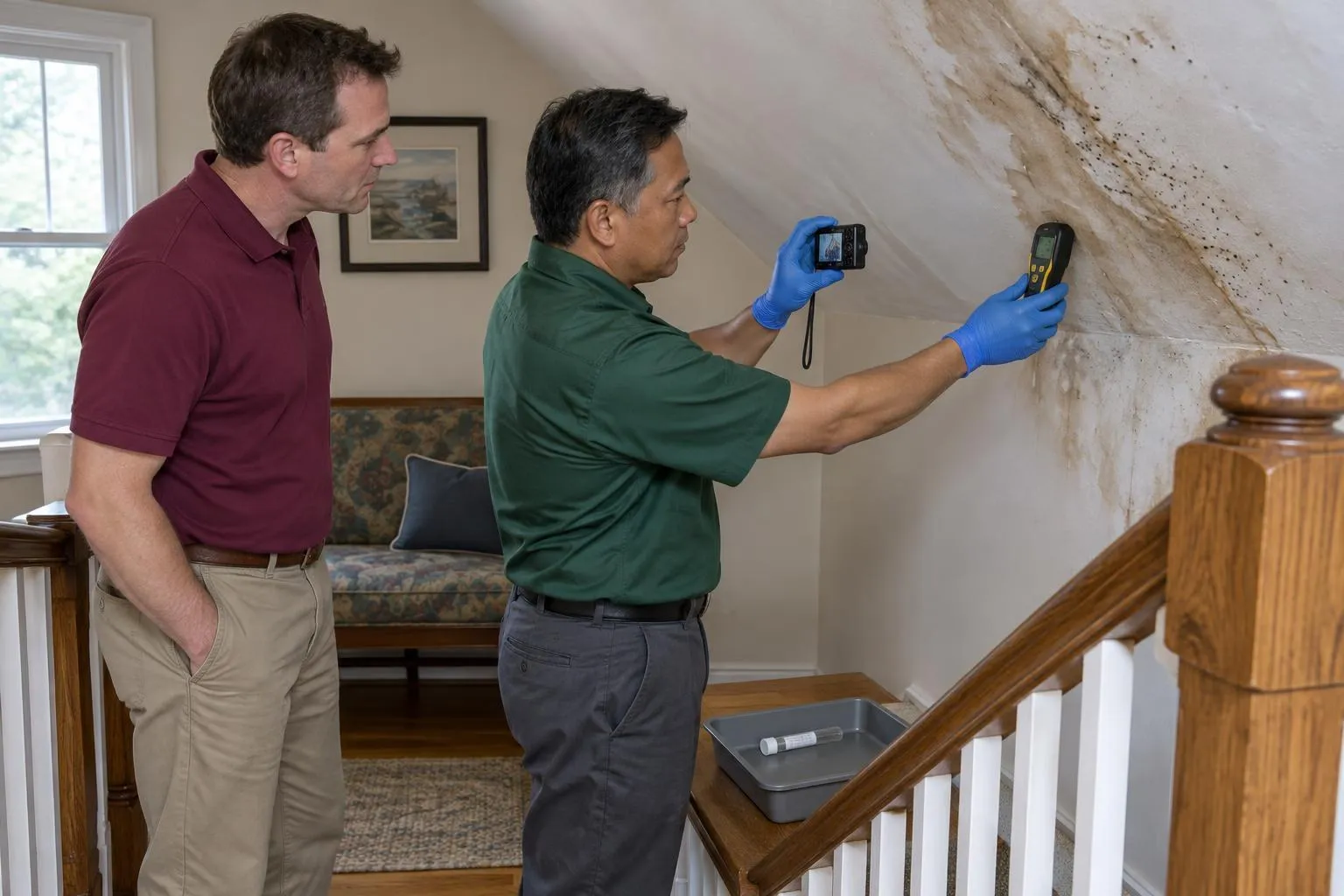
How to Review a Mold Inspector's Work (Quality Checklist)
Your mold inspector's report needs visual proof, moisture readings, and lab results—here's exactly what to demand on a quality checklist.
Looking for more? Browse our full resource library or find mold inspectors in other cities.